

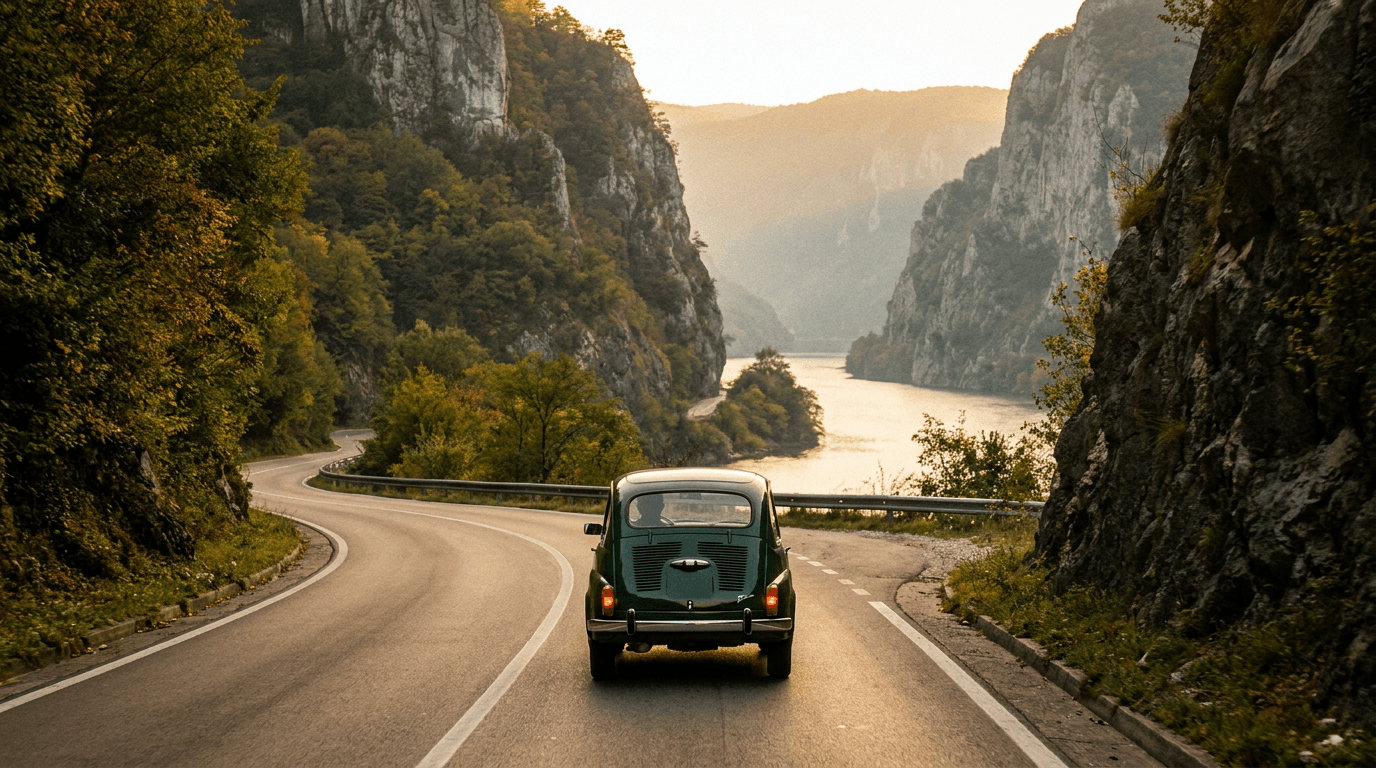
Discover Serbia's Automotive Experiences
From the Belgrade tuner scene to the Zlatibor mountain driving roads, Serbia is the cultural heart of Balkan car culture.
Overview
Serbia is one of Eastern Europe's most underrated automotive cultures — a country at the centre of the Balkans with a serious classic and modified scene most drivers haven't discovered. Belgrade hosts weekend meets that pull in everything from restored Yugos to modern German performance cars to Soviet-era classics that locals have kept running through every economic and political shift the region has thrown at them.
The wider scene runs on two strands. The classic Yugo — the much-mocked little Zastava that became one of the most-produced cars in the Balkans — has been quietly elevated to cult status, with restored examples appearing at meets across the region. Alongside it, the modified import scene around Belgrade and Novi Sad runs strong on BMW and VW platforms, and Serbian drifters compete seriously across European events. The revived Belgrade Race — a long-running street race through the city — turns the capital into a motorsport weekend.
To drive in Serbia is to use a country that's far more rewarding than its reputation suggests. The route through Kopaonik National Park and the crossings into Bosnia, Montenegro, and North Macedonia open up some of the most underrated driving terrain in Europe.
Why Visit Serbia
What makes Serbia a must-visit destination for motorsport and automotive enthusiasts
Zastava and Yugo Heritage (Kragujevac)
Serbia's automotive heart is in Kragujevac, where Zastava Automobili (founded 1853 as an arms factory, started building Fiat-licensed cars in 1953) produced the cars that moved Yugoslavia and several generations of Eastern Europeans. The Zastava 750 (the legendary Fića, in production 1955-1985) was the people's car that made driving accessible to working families across the SFRY. The Zastava Yugo (1980-2008) became globally infamous after its US launch and is now a cult restoration object. Production ended in 2008 when Fiat took over the Kragujevac plant — the FCA Serbia factory now builds the Fiat 500L and Stellantis Grande Panda. Active Zastava and Yugo clubs across Belgrade and Novi Sad organise restorations, meets, and parades.
Belgrade Grand Prix and Kalemegdan Heritage
One of the most poignant chapters in motorsport history. The Belgrade Grand Prix ran on 3 September 1939 — just two days after Germany invaded Poland, at the Kalemegdan Fortress in central Belgrade. Tazio Nuvolari won the race in an Auto Union D-type, with Hermann Lang second in a Mercedes-Benz W154. It would be one of the last Grand Prix races held before WW2 stopped European motorsport for six years. The Kalemegdan park and fortress in central Belgrade preserves the route — you can walk the original circuit. Modern commemorations (the Belgrade Grand Prix Historic event) bring period cars back to the streets. The Old Timer Car Museum nearby holds Yugoslav and pre-war automotive heritage.
Western Serbia Driving (Tara, Zlatibor, Mokra Gora)
Western Serbia delivers the country's classic road trip. The 400km loop from Belgrade through Tara National Park (the dramatic Banjska Stena cliff above the Drina Canyon), Zlatibor mountain plateau (with its distinctive traditional architecture), and Mokra Gora (the location of Emir Kusturica's Drvengrad ethno-village and the historic Šargan Eight narrow-gauge railway). Mountain roads, mostly paved but with some rougher sections at viewpoints. The route covers the heart of Serbian rural identity — Orthodox monasteries, wooden villages, and the Drina River forming the Bosnian border. Best driven April-October; winter brings snow above 1,000m and several roads close. Easily a 4-5 day loop with proper stops.
Đerdap Gorge Drive (Iron Gates)
The Đerdap Gorge (Iron Gates) is one of Europe's most dramatic Danube drives. Route 7 runs 150km along the southern (Serbian) bank of the Danube from Golubac east to Kladovo, where the river cuts through the Carpathian Mountains in canyons up to 240m deep. The Roman-era Tabula Traiana monument is still visible cliff-side. The medieval Golubac Fortress at the gorge's entrance is one of Serbia's most photographed historic sites. The road has been substantially upgraded in recent years, making it a manageable scenic drive with tunnel sections and Danube views throughout. Cross-border options to Romania via the Iron Gates Hydroelectric Power Station (international border crossing). Best driven April-October.
Belgrade Classic Car Culture
Belgrade's classic car scene is one of the strongest in the Balkans. The Old Timer Car Museum (Muzej Automobila Beograd) holds 50+ vehicles from the 1900s onwards, housed in the historic Old Garage building (a 1929 structure with connections to the 1939 Belgrade GP). Weekly Sunday classic car meets at Belgrade Fair (Beogradski Sajam) bring Yugos, Zastavas, restored Mercedes-Benz, BMW classics, and modified Yugoslav-era cars. Multiple active clubs: the Yugoslav Old Timer Club, the Zastava Heritage Club, and various marque-specific groups. The annual Belgrade Old Timer Show in spring is the biggest classic car gathering in the region. Affordable restoration culture — Belgrade is one of the cheapest places in Europe to restore a classic.
Serbian Hillclimb and Domestic Motorsport
Serbia's domestic motorsport identity centres on hillclimbs and rallying rather than circuits (there's no major permanent racing facility in the country). The Divcibare Hillclimb (early summer at Divcibare ski resort west of Belgrade) is the country's flagship motorsport event, a round of the European Hill Climb Championship attracting GT, sports prototype, and historic entries. The Rally Serbia, run as part of the Serbian and regional Balkan rally championships, uses gravel stages around Belgrade, Cacak, and Kragujevac. Plus an active drift scene at the AMS Karting Belgrade venue. The Belgrade Karting Circuit at Krnjaca is the closest thing to a permanent venue — used for FIA Karting events and the Serbian karting championship.
Frequently Asked Questions
Common questions about visiting Serbia for motorsport
Depends on your licence. EU/EEA licences are accepted without an IDP. UK, US, Canadian, Australian licences are accepted for tourist driving up to 6 months without an IDP, though some rental companies prefer one regardless. If your licence isn't in Latin script, an IDP or certified translation is required. Get an IDP issued in your home country before travel — cheap, removes any uncertainty at rental pickup and police checkpoints (which are routine across Serbia). Serbia drives on the RIGHT.
Stay Updated on Serbia Events
Get notified when new events and experiences are added. Be the first to know about ticket releases and special offers.
No spam, unsubscribe anytime. We respect your privacy.