Germany's motorway network is part of the country's automotive identity in a way no other country's road system is. Around 70% of it has no posted limit, but the rest does — and the limit changes constantly with weather, roadworks, and traffic density. The real story is the discipline: strict lane discipline (keep right unless overtaking), no passing on the right, and closing speeds that can hit 100km/h between vehicles. It's not a high-speed playground. It's a high-speed environment that rewards skill, situational awareness, and respect for the rules. That's what makes driving it worth doing.
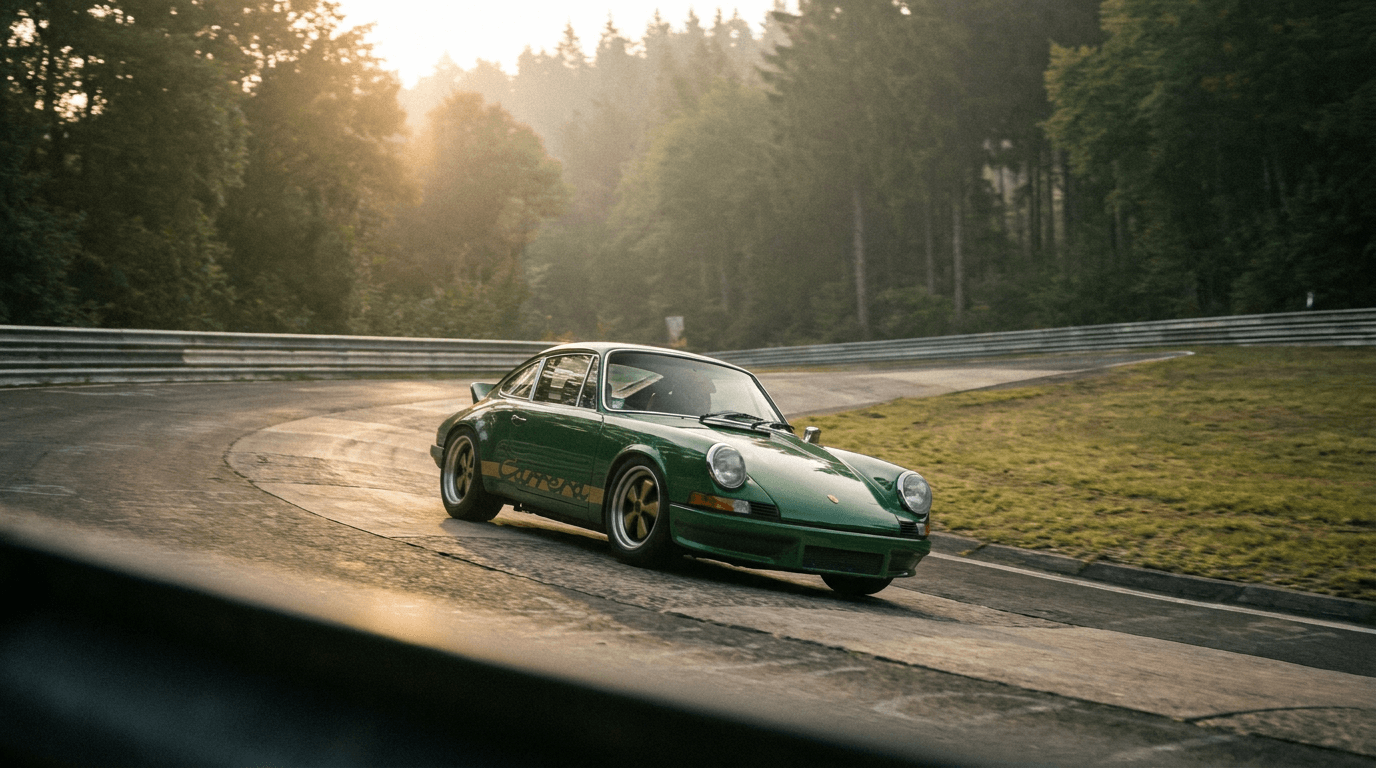
20.8km of public toll road through the Eifel forest, with 73 corners, 300m of elevation change, and a century of motorsport history written into the tarmac. Touristenfahrten days open the Nordschleife to anyone with a road-legal vehicle and the willingness to pay per lap. The corners have names, the surface bites in the wet, and the consequences of getting it wrong run from expensive to fatal. First-timers should walk it, watch it, and ride passenger before they drive it. Then drive it carefully. The Ring rewards patience over speed.
Germany's second major motorsport venue, with deep F1 history (hosting the German Grand Prix in alternation with the Nürburgring for decades) and a calendar that now runs DTM, classic motorsport festivals, and serious open track days. The circuit sits in the Rhine Valley north of Stuttgart, which makes it logistically straightforward for visitors basing themselves around Mercedes-Benz, Porsche, or the broader Baden-Württemberg automotive region. The Motorsport Arena Hockenheim museum is also worth the stop if you're there for a non-event day.
Few countries can match Germany for manufacturer-built museums. The Mercedes-Benz Museum in Stuttgart traces 125 years of automotive history through a spiral architectural masterpiece. BMW Welt and the BMW Museum in Munich cover both heritage and current product. The Porsche Museum in Zuffenhausen, the Audi museum mobile in Ingolstadt, and Volkswagen's Autostadt in Wolfsburg complete the set. You could base an entire German trip around these — they're concentrated enough in Stuttgart, Munich, and the Bavarian-Baden-Württemberg corridor to make it feasible.
Beyond the museums, Germany lets you watch cars being built. BMW's Munich plant, Porsche Leipzig, Mercedes-Benz Sindelfingen, and Volkswagen's Autostadt in Wolfsburg all run scheduled production tours that take visitors through actual assembly lines. Spots are limited, advance booking is essential, and age restrictions apply at most facilities (typically 6+ for the safer routes, 14+ or 18+ for full production-line access). For engineering-minded visitors, watching a 911 or an S-Class come together is a different experience from any museum.
One of Europe's great named driving roads — 484km from Lindau on Lake Constance to Berchtesgaden on the Austrian border. Germany's first themed touring road, designated in 1927. Threads through 21 lakes, eight mountain passes, and some of the most photographed Alpine scenery in Europe. The Sudelfeld pass and the Rossfeldpanoramastrasse loop are the standout sections. Best driven over two to three days. Ends right at the Austrian Tyrol border.