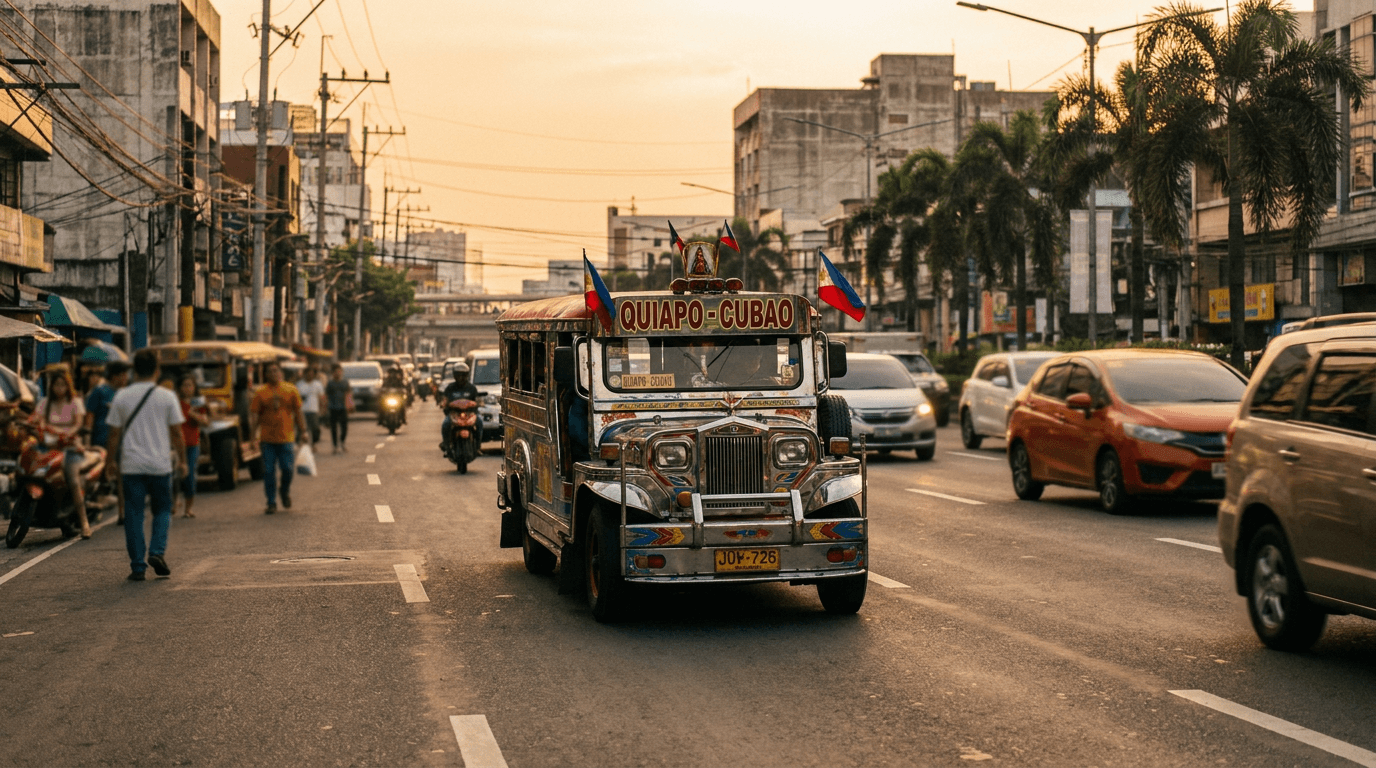
The Philippines has one of the world's most distinctive everyday automotive cultures. Jeepneys — originally adapted from surplus US military Jeeps after WW2 — evolved into the country's defining public transport: extended, brightly painted, chrome-trimmed minibuses with elaborate destination signs, religious imagery, hand-lettered slogans, mounted horse hood ornaments, and full sound systems. Each jeepney is unique. The PUV Modernisation Programme is gradually replacing the diesel original with Euro-4 and electric mini-buses (a controversial transition affecting tens of thousands of drivers). Manila's Quiapo, Recto, and EDSA routes have the most expressive surviving fleet. Photograph respectfully; ride at least once — the experience is half the country's automotive identity.
Two main circuits anchor Philippine motorsport. Clark International Speedway (Pampanga, 90 minutes north of Manila) is the country's premier permanent circuit — a 4.2km layout built on former US Air Force base infrastructure, hosting the Philippine GT Championship, Vios Cup (one-make Toyota racing), Toyota Gazoo Racing series, and an active motorcycle calendar. Batangas Racing Circuit (south of Manila, BatRC) is the country's other major venue at 3.7km, the home of the Philippine touring car series and active track day programs. Plus the Subic International Raceway (now closed but historically significant) and the Carmona Race Track for karting and grassroots events. Track days at Clark from PHP 4,000-8,000 (~US$70-140) for cars; instructor packages widely available.
Northern Luzon delivers the country's defining road trip. The classic loop from Manila runs north on the SCTEX/TPLEX expressways to Baguio (the "summer capital" at 1,500m elevation), continues through the Cordillera Mountains to Sagada (limestone cliff country), Banaue (the 2,000-year-old UNESCO rice terraces), then descends through Vigan (Spanish colonial heritage, UNESCO), and returns down the coastal Ilocos region. The full circuit covers 1,500km of mountain switchbacks, paved highways, and dramatic coastal sections — doable in 7-10 days. The Halsema Highway (the highest paved road in the Philippines at 2,255m) is the technical highlight. Best driven November-May (dry season); typhoon season June-October brings landslide risk in the mountains.
Philippine tuner culture has its own distinctive identity, shaped by the country's left-hand-drive-only rules (no Japanese RHD imports), Civic and Corolla dominance, and Manila's parking and garage constraints. The scene centres on Honda Civic EG, EK, and FD generations; Toyota Corolla "big body" and "small body" sedans; and the unexpected love for late-1990s Mitsubishi Lancer EVO IV-VI imported during the brief LHD JDM grey window. Most builds are sleepers — modest external mods masking serious internal work, partly because of strict Philippine modification laws (loud exhausts and visible body kits attract police attention). The strongest enthusiast clusters: Manila's Greenhills, Quezon City, and Pasig districts. Local online community (Tsikot.com forum, multiple Facebook groups) connects builders, parts traders, and event organisers.
Motorcycle touring is increasingly the right way to experience the Philippines beyond Manila. The Northern Luzon Loop (Baguio-Sagada-Banaue-Vigan, 1,500km over 7-10 days) is the country's classic ADV ride, with Honda XR150L, Kawasaki KLX150, and Yamaha XSR155 as the dominant local rentals (€15-25/day). Plus the Cebu-Bohol-Negros island-hopping routes via RORO ferries (popular for shorter trips), and the Mindoro and Palawan island circuits. Manila to Baler (the coastal surf town) via the Pacific Coast highway is a popular weekend ride. Easyrider services pair you with a local guide on a second bike. The scooter and small-displacement Yamaha Mio/Honda Click culture dominates everyday transport — different category from the touring scene but equally Filipino.
Beyond the public jeepney, the Philippines has a deep "owner-type jeep" culture — privately-built Jeep-inspired vehicles assembled from surplus military bodies, modified CJ-3 and CJ-5 platforms, and locally fabricated chassis using imported drivetrains. MD Juan (the country's most established Jeep CJ body manufacturer, in Cainta near Manila) supplies fiberglass and steel reproductions globally. The Philippine military adopted the locally-built M151 successors. Owner-type Jeep weekend meets and off-road events run at Sierra Madre and Subic. Plus the surplus parts ecosystem at Quiapo and Caloocan markets — the world's most active surplus military Jeep parts trade. Genuine Filipino mechanical ingenuity — the kind of post-war workshop culture that turned available parts into the country's transport identity.