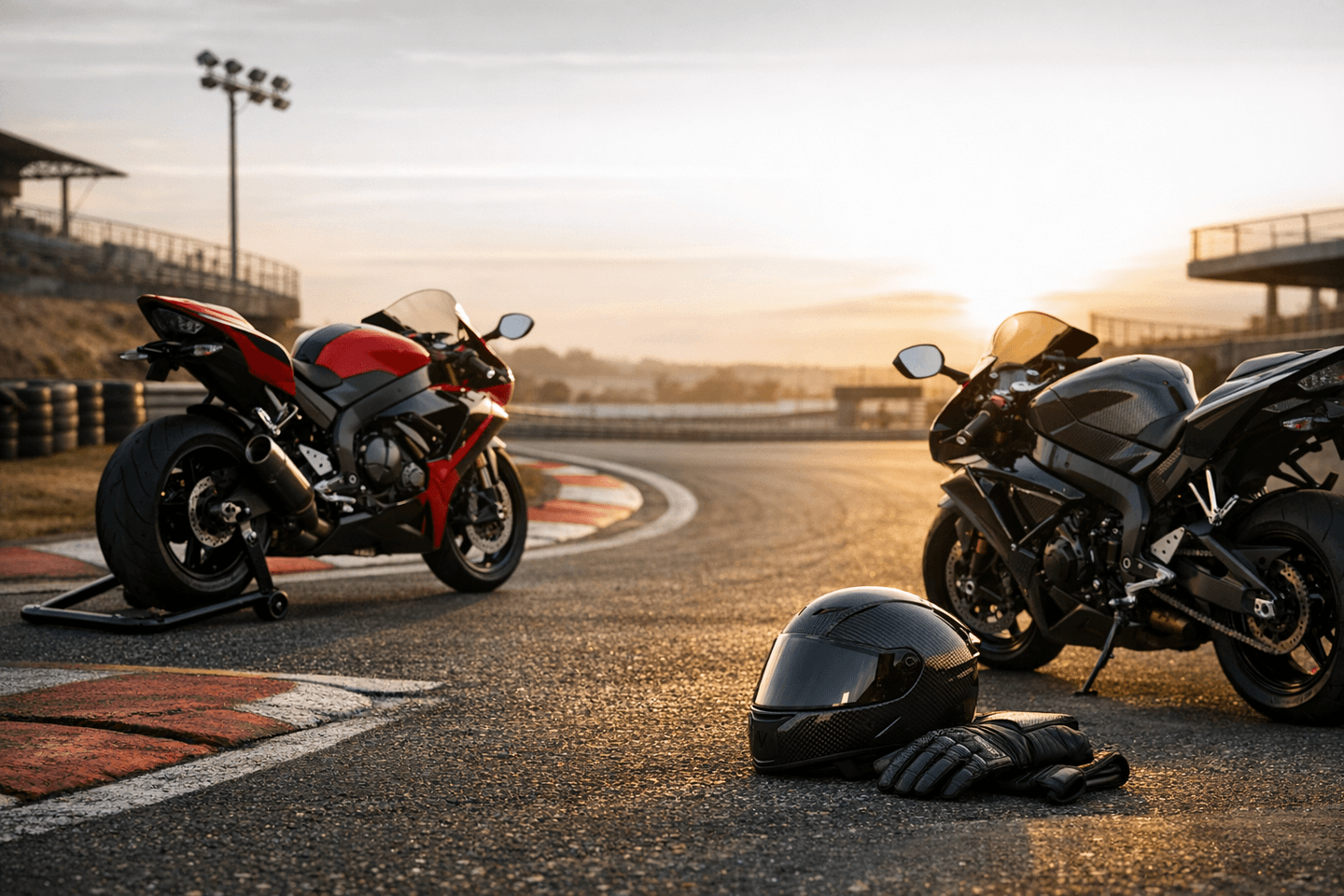
The Pertamina Mandalika International Street Circuit (on Lombok island, near Kuta Mandalika) is Indonesia's modern motorsport anchor. The 4.31km circuit (opened 2021) hosts the Indonesian MotoGP Grand Prix — the country's return to top-tier motorcycle racing after decades away. The track has 17 corners and a stunning setting between tropical hills and the Indian Ocean. The event is hugely popular given Indonesia is one of the world's largest motorcycle markets (130 million+ bikes). The honest framing: the circuit has faced challenges with track surface degradation in extreme heat and monsoon-season rain affecting race weekends — the late-September/October date sits at the edge of the wet season. Beyond MotoGP, the circuit hosts the Asia Talent Cup and regional championships. Combine with Lombok's Mount Rinjani and the Gili Islands for a complete trip. Tickets via the official MotoGP and circuit channels.
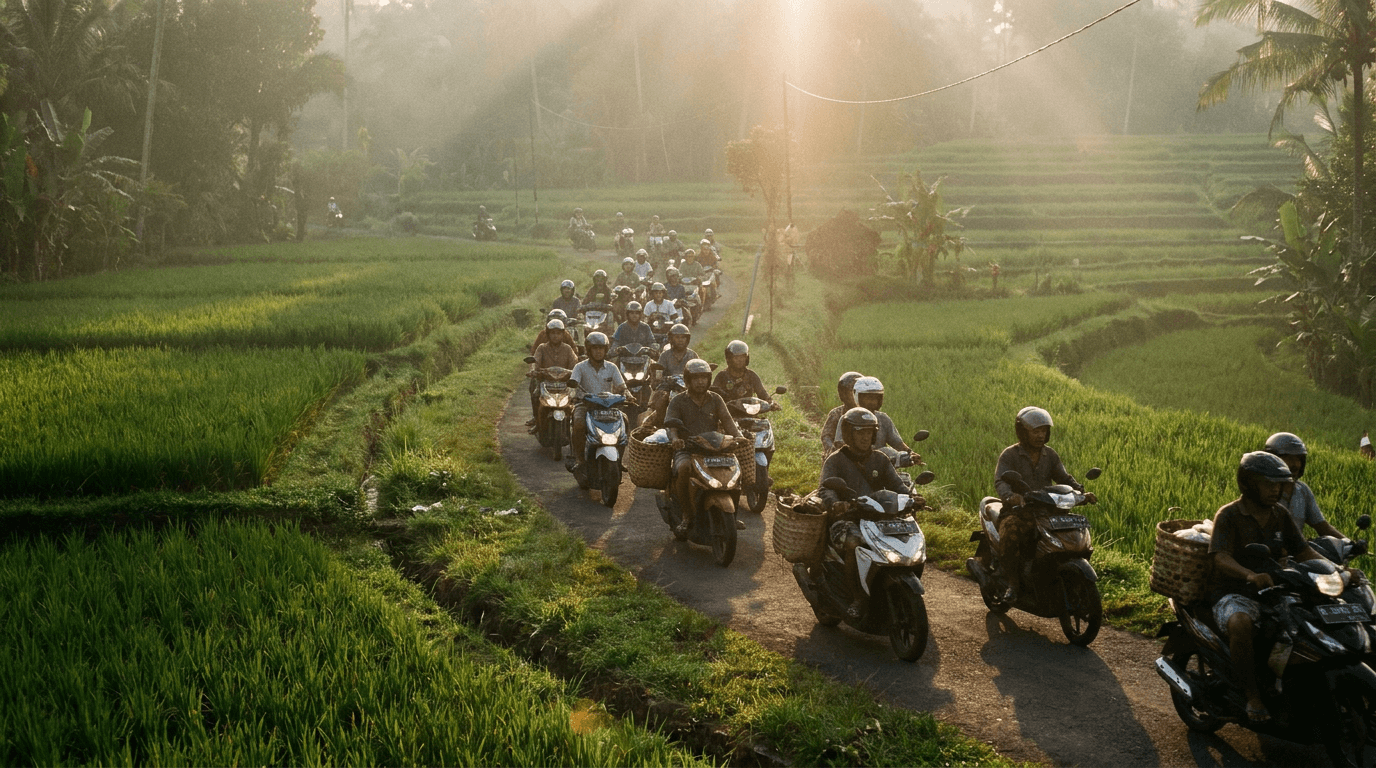
Indonesia is one of the world's great two-wheel cultures, and Bali is the immersive entry point. Scooters (Honda Vario, Yamaha NMAX, and similar) are the dominant mobility — you'll see entire families on one bike. For visitors, the honest framing: scooter rental is everywhere and cheap (IDR 70,000-150,000/day, ~€4-9), but Bali's traffic is genuinely chaotic, police stop tourists for licence checks, and accident rates are high. A motorcycle endorsement on your licence plus an IDP is legally required. The reward: escaping south Bali's congestion (Kuta, Canggu, Seminyak) for the island's stunning interior — the Munduk highlands, the Jatiluwih rice terraces (UNESCO), the Kintamani volcano caldera road around Mount Batur, and the quiet east coast (Amed, Sidemen). Ride defensively, wear a proper helmet, and avoid riding at night. The flow follows local intuition more than formal rules.
Sumatra is Indonesia's serious adventure-riding island — vast, volcanic, and far less touristed than Bali. The classic route starts in Medan (the northern gateway) and climbs to Berastagi through dense mountain switchbacks past the active Sinabung and Sibayak volcanoes. The highland centrepiece is Lake Toba — the world's largest volcanic crater lake (1,145km², formed by a supervolcanic eruption 74,000 years ago) with the island of Samosir at its centre and a spectacular ring road. Riders describe multi-week itineraries (2,000km+) through Bukittinggi's Minangkabau highlands, the Harau Valley canyon, and the Trans-Sumatra mountain roads. The honest framing: roads are rough, humid, and busy with truck traffic; average speeds rarely exceed 40-50km/h. Light scooters or small adventure bikes suit the terrain better than big touring machines. Best ridden May-September (dry season).
East Java's volcano corridor is one of the world's most dramatic riding/driving landscapes. Mount Bromo (2,329m, an active volcano inside the vast Tengger caldera) is reached via a road that descends into the "Sea of Sand" — a surreal volcanic plain crossed to reach the crater rim, famous for sunrise views over the smoking cone. Continuing east, the Ijen volcano (2,769m) is known for its surreal electric-blue flames (burning sulphur) and the world's largest acidic crater lake — the approach road climbs through coffee plantations near Banyuwangi. The two connect into a 3-4 day overland route, naturally linking with the Ketapang-Gilimanuk ferry to Bali (the busiest vehicle ferry crossing in Indonesia). The honest framing: roads are narrow, potholed, and steep near the craters; 4WD or a capable bike helps. Best ridden April-October (dry season).
The Lesser Sunda Islands (Nusa Tenggara) deliver Indonesia's ultimate archipelago overland journey — island-hopping by road and ferry from Bali eastward through Lombok, Sumbawa, and Flores. The Flores loop is the crown: from Labuan Bajo (the Komodo dragon gateway) inland through Ruteng, Bajawa, and Moni to the Kelimutu volcano (famous for its three crater lakes that change colour), with coastal detours to Koka Beach. Riders describe 6-7 day loops on winding mountain roads through some of Indonesia's most remote and beautiful country. Ferry crossings (Bali-Lombok, Sape-Labuan Bajo) are part of the adventure — variable timing, basic comfort, treated as travel days. The honest framing: this is committed adventure travel — rough roads, slow averages, and real distances. A genuine archipelago expedition for those with weeks rather than days. Best May-September.
Indonesia has a surprisingly deep modified car culture, concentrated in the major Java cities. The scene is JDM-influenced and built on practical compact platforms — K-swapped Honda Brio and City builds, Toyota AE86 and Starlet restorations, and Datsun-era classics, rather than exotic supercars. Jakarta, Bandung, and Surabaya are the enthusiast gravity points, with active meet culture, tuning workshops, and show-car competitions. The Indonesian builds are known internationally for creative, high-quality stance and engine-swap work on affordable cars. Plus the working-heritage layer: the 500+ vintage BSA motorcycles still operating as sidecar taxis in Siantar (North Sumatra), and the bemo and bajaj three-wheelers of Jakarta. The honest framing: this is an urban scene to seek out at meets and workshops, not a road-trip destination — Indonesian car culture is best understood through the cities' enthusiast communities.