Morocco is one of the world's premier rally-raid destinations. The Rallye du Maroc (running annually each October) is a major round of the FIA World Rally-Raid Championship — typically a 5-day, 1,800km+ event covering the Atlas Mountains, eastern Hamada plateau, and Sahara dunes around Zagora, Merzouga, and Erfoud. The event acts as the final proving ground before January's Dakar Rally; manufacturer teams (Audi, Toyota, Ford M-Sport) and privateers use it to test cars, drivers, and navigation in Dakar-style conditions. The Africa Eco Race (January) is the spiritual successor to the original African Dakar route, running from Monaco through Morocco to Senegal. Plus a deep rally-raid expedition operator scene around Ouarzazate offering navigation training.
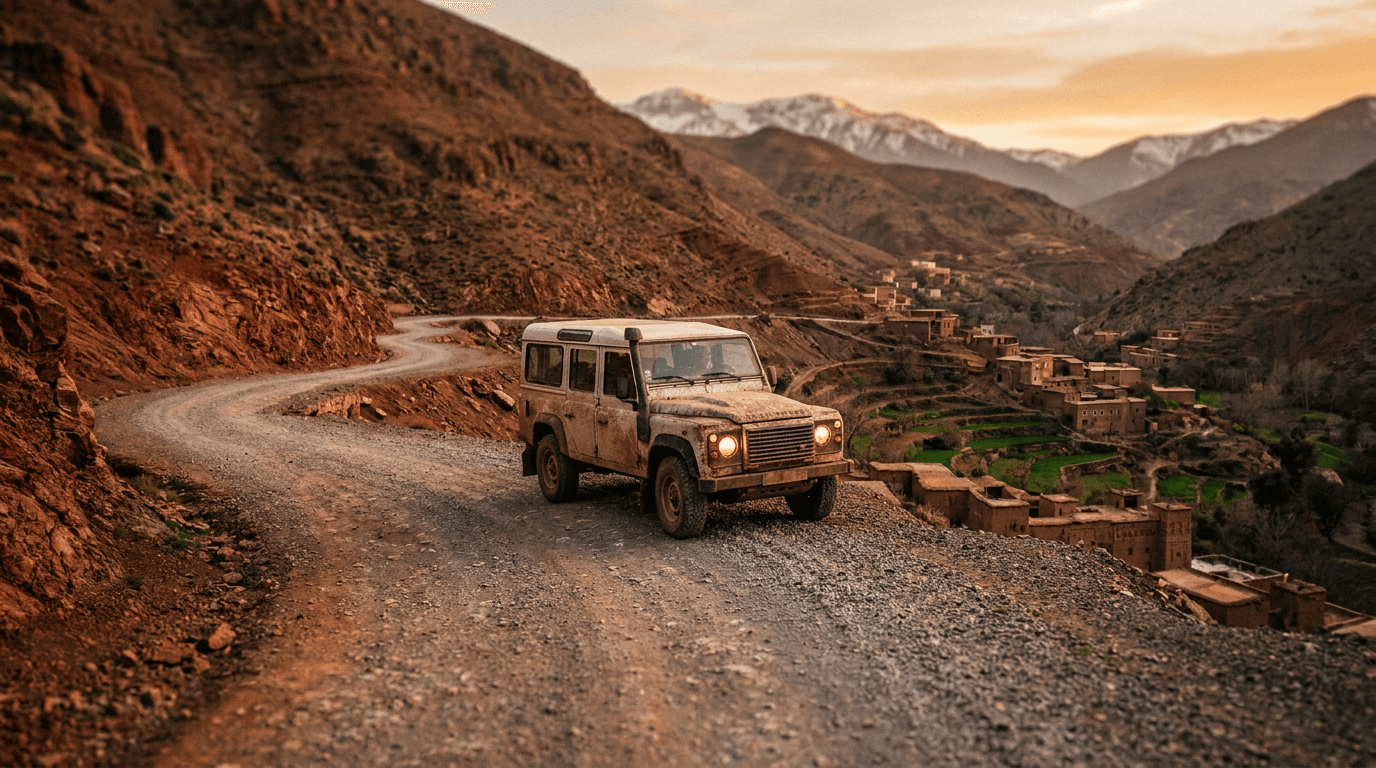
The High Atlas delivers some of the world's most rewarding mountain driving. The Tizi n'Tichka pass (the N9 from Marrakech to Ouarzazate, climbing to 2,260m through 49 hairpins) is the country's signature mountain road, recently widened and improved. The Tizi n'Test (the older route over the Western High Atlas, 2,092m) is narrower and more dramatic. The Dades Gorge and Todra Gorge area features the spectacular R704 cliff drive with its famous switchback section called the Twisting Road (one of the most-photographed road shapes on Earth). The R704 connector between Dades and Todra goes paved-then-gravel — confirm current conditions before attempting. Best driven April-June and September-November; winter brings snow above 2,000m.
Morocco has a surprisingly strong modern motorsport calendar. The Circuit International Automobile Moulay El Hassan (the Marrakech Street Circuit in the Agdal district) hosts the Marrakech E-Prix — a Formula E championship round since 2016, traditionally held in early spring. The same 2.97km layout previously hosted the FIA WTCC/WTCR World Touring Car Cup from 2009-2019. Plus the Circuit Moulay El Hassan in Anfa, Casablanca for national racing, and an emerging Moroccan karting scene around the Kart Driving Centre at Casablanca. The Marrakech E-Prix is one of the most accessible Formula E rounds globally — the street circuit's medina-adjacent location makes it walkable from many hotels.
Morocco's Sahara is genuinely accessible for self-drive 4x4 adventures. The classic destinations: Erg Chebbi (the iconic 150m dunes near Merzouga, accessible by 4x4 from the paved road), Erg Chigaga (the more remote, larger dunes near M'Hamid, 50km off-road from the last paved road), and the more eastern Hamada plateau south of Erfoud. Local 4x4 operators in Merzouga, M'Hamid, and Foum Zguid run guided dune-driving experiences (€80-150/day with driver) and proper expedition tours (3-7 days with bivouac camping). Self-drive deep into the dunes requires GPS, satellite communication, sand recovery gear, and prior experience — most international visitors use local guides. Best driven October-April; summer is genuinely lethal (50°C+).
Morocco is Africa's largest car producer. The Renault Tangier plant (Tangier Med Port Free Zone, opened 2012) is the largest car factory on the African continent — producing 400,000+ Dacia Sandero, Logan, Lodgy, and Renault Express vehicles annually, exported globally. The Stellantis Kenitra plant (opened 2019) builds the Pežot 208, Citroën C3, and now the Opel Frontera, with a production capacity of 400,000 vehicles. Combined, Morocco builds 700,000+ vehicles annually — more than any other African country. Both plants offer corporate group tours by arrangement (not casual public access). Plus a strong automotive components industry around Tangier and Kenitra serving European OEMs. The Mohammed V Foundation Automobile Museum in Casablanca is the country's main automotive cultural institution.
Casablanca has more automotive heritage than most visitors expect. The Ain Diab Circuit (a temporary 7.6km road circuit south of the city along the Atlantic coast) hosted the 1958 Moroccan Grand Prix — the country's only Formula 1 World Championship race. Stirling Moss took the win, but the race is best remembered as the event where Mike Hawthorn clinched the F1 World Championship title. The original circuit roads remain drivable as a coastal touring drive (the Corniche d'Ain Diab is now Casablanca's beachfront promenade). Plus the modern Mohammed V Foundation Automobile Museum, the Casablanca-Marrakech motorway giving access to the Atlas, and the start of the Atlantic coast road south to Essaouira and Agadir. A natural entry point for first-time Morocco automotive trips.